Children communicate in many ways. While adults often rely on words to express thoughts and emotions, children may communicate through play, drawings, gestures, behaviour, and imagination. For some children, talking directly about difficult feelings or experiences can be challenging. This is where creative and play-based therapeutic approaches can provide a valuable means of expression.
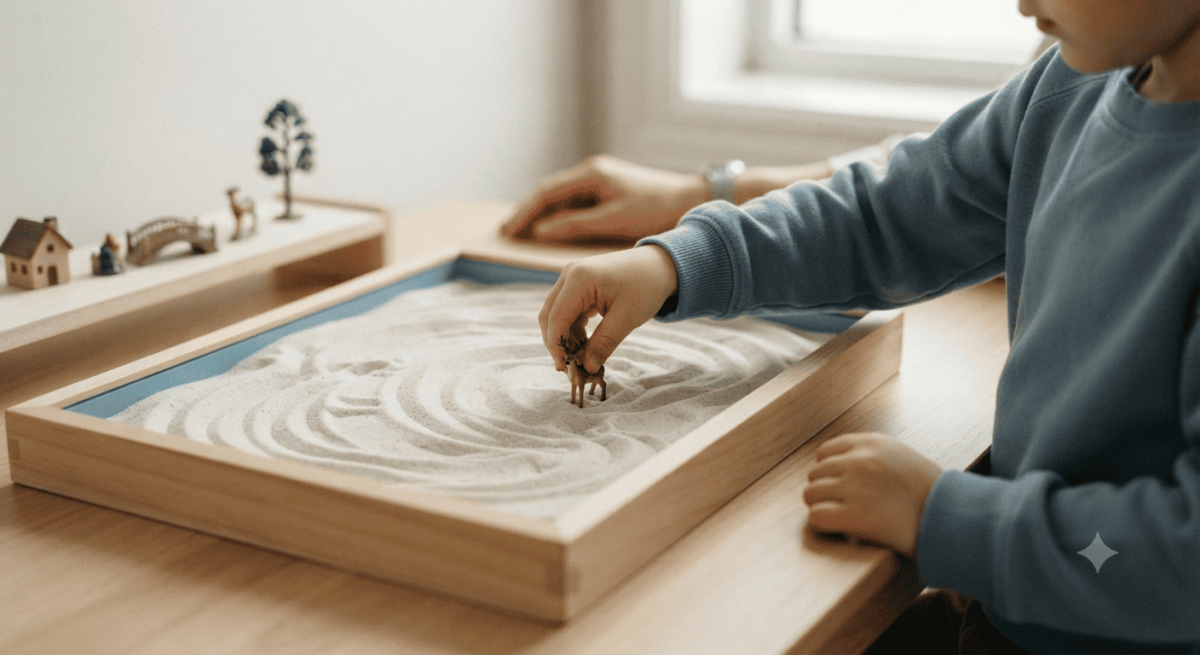
Sand Tray Therapy offers children a structured and supportive space where they can use sand, miniature figures, objects, and imaginative play to create scenes and stories. The sand tray can become a small world in which children are able to represent ideas, emotions, relationships, experiences, or situations in a way that feels natural to them.
The therapeutic setting provides an opportunity for children to explore their experiences at their own pace. Creating and changing scenes can encourage expression, creativity, self-awareness, and communication. For some children, the activity itself can also make therapeutic interactions feel less intimidating and more engaging.
Sand tray activities may be incorporated into therapy according to the child’s individual needs, developmental level, and therapeutic goals. It is important to remember that children differ considerably in the way they play and express themselves. The meaning of a child’s creation should therefore be understood within the broader context of their development and clinical assessment rather than interpreted in isolation.
At the Child Development Centre, KGMU Lucknow, child-friendly therapeutic approaches aim to create an environment where children feel safe, respected, and understood.
Sometimes, a child may not be ready to say, “This is how I feel.” They may instead build a little world in the sand.
And sometimes, that little world can open the door to communication, understanding, and connection.